
The Séance of Blake Manor Interview with Treasa McCabe
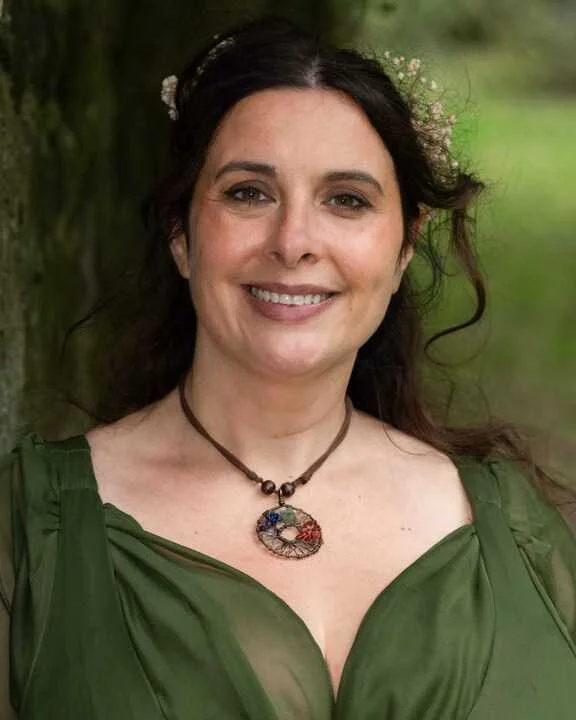
Treasa McCabe, lead developer and designer at studio Spooky Doorway
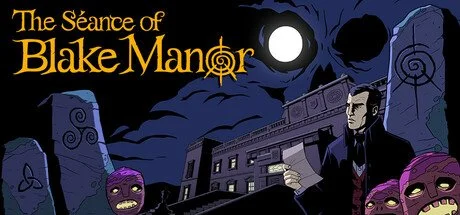
I had a chance to interview Treasa McCabe, the lead developer and designer for the recently-released indie game, The Séance of Blake Manor. The Séance of Blake Manor is a supernatural detective mystery, set in 1897 Ireland, where you investigate the disappearance of Evelyn Deane in a remote hotel full of secrets and other-worldly occurrences.
You can play the overwhelmingly reviewed title here on Steam: https://store.steampowered.com/app/1395520/The_Sance_of_Blake_Manor/
Now onto the interview!
Hey Treasa! Thank you for the opportunity to do this interview with you. I was really excited when Mara at Raw Fury reached out. I'll jump right in to the questions!
What would you say was your biggest inspiration when writing the design and narrative for The Séance of Blake Manor?
The Séance of Blake Manor has been through many iterations of design and I’d love to say that there was
a single design vision that was there from concept and followed through to delivery but like most things in
life it battled through a few messy side quests to get to what it was on release.
The original game was essentially a linear story following through what happened to Evelyn Deane with
no NPC mysteries, time, madlibs, mindmaps or sigils. It had a linear quest log, profiles, a trust system,
sneaking and even a shoot-out. It also happened over two days instead of three, and even some of the
key moments were very different and happened in different locations. I spent some time exploring the
idea of the detective game and defining how and why our game wasn’t one. Time came in as a result of
needing to give agency back to the player - we wanted them to be able to explore a linear narrative non-
linearly.
Mindmaps are the classic detective deduction tool and, in general, are how I sort out my own thoughts -
so they became the new way of organising clues that could now be obtained in a non-linear way into a
coherent concept. The game is a large space with a lot going on and a very complex narrative so the
madlibs came about as a way that the player could check in with themselves: making sure they knew what
was going on, didn’t feel too overwhelmed and felt smart. They were used as a way of “narrative balance”
to slow the player down and make sure that concepts were being digested, rather than just lore dropped.
We dropped a lot of systems and added others as we tried to find that space between magic and science
and how to make our art style work with the world and mechanics, while also trying to stay on time and
under budget. We were so lucky to have such an amazing team behind us as I think literally everyone that
sat on our Slack or even passed through probably had something to say about the design, flow, balance or
mechanics. That is the magic of indie game dev, really, when you give people who are passionate about
something the space to give feedback and be part of regular debate about it, you can allow something
really beautiful to be born. That often ends up better than one original concept because it’s the result of a
melting pot of ideas and inspiration.
From a technical perspective, I think the save system structure was probably one of the madder designs.
We used a diff-based system to allow the player to traverse any timeline from any given save. I’m looking
forward to seeing how that will come back to bite us in the bum if we try to make the game work on other platforms.
I really love how helpful the UI is in the game. As someone who is terrible at taking notes, it's extremely
helpful to have what you’ve learned about a character easily accessible. Is this something you planned
to have in the design early on or did this come later in development?
The mindmaps are something I was gunning for from the start and they were brought into the game very
early as one of our devs built out the original concept for a mindmap where all the nodes automatically
floated at random near each other according to how related they were instead of having any set
organised structure. Everybody hated the design and to be fair, they were very messy and chaotic at first
and were just lots of evidence which you could manually make connections between. To be honest, in
another game, I think I would still like to try to do something like that but they were very difficult to parse.
There was a good bit of talking to different UX and design consultants about them before Lorna McFall
and Guilhermo von Scharten Heldt took over, turning them into the far more coherent entity that they are
now. The Guess Who board was the hardest thing to get right design-wise and we went back and forth a
lot on how to show this in its own context while also showing it as part of the larger mystery map. Leads
came later as we found through playtesting that, having removed quest logs entirely, players were
somewhat overwhelmed in the sea of possibilities and wanted to have at least some options of
possibilities that were available to them at that time.
Mazen Sukkar did a lot of pulling together the mysteries into coherent webs using a quite unwieldy
spreadsheet and all of the QAs, but Ryan Reilly particularly, really helped to iterate on them through
countless playthroughs and modifications from playing each storyline in a different order.
I also loved the time mechanic in the game. I’ll be honest, timers in games stress me out. I'm always
worried I’ll miss something vital or interesting while I race to my next objective, but I never felt that
way with The Seance at Blake Manor. Having time move only after making a decision really added to
the puzzle aspect and over all intrigue. What made you decide to design it this way?
So I think I probably jumped the gun and mentioned this above, but the time mechanic came from the
need to tell a linear story in a non-linear world while maintaining player agency. Something different
about The Séance of Blake Manor from other mystery games is that you don’t arrive after the mystery has
happened but more as it is unravelling and you have the capacity to change what is happening. As a
result, people needed to have their own schedules they were following and time needed a means of
moving forwards.
I am not a big fan of big real-time pressures in games myself, and in a game where we want you to
explore, think and be careful with your actions, this mechanic absolutely would not have fit. The slow
paced deliberate actions with consequences fits the genre and the setting and, hopefully, teaches the
player early what kind of world they are in without being overly punishing or pushing them towards trying
to min-max, which the game is just too long and narratively complex for. My mother was the gamer in my
house as we were growing up and both her and, our narrative lead (and my husband), Dave’s mother are
Agatha Christie, murder mystery fans so I think I also aspirationally imagined them playing the game and
enjoying working things out and seeing things unfold. This has still not yet happened but maybe someday.
If it does happen, they can know we thought about them in the design.
Time was, by a long shot, the hardest thing in the game to balance. Trying to account for a player having
just enough space, just enough objectives and just enough actions in any given time slot while also not
punishing people for behaving like an investigator was a hard task. We went back and forth on how much
time to give, how much things should cost and what should and should not cost time to skirt the line
between realistic, fun and the experience and knowledge we wanted the player to have. Examples of
things that originally cost time were reading books in the library, getting a hypothesis wrong, incorrect
confrontations (in fact, originally, confronting someone with the wrong hypothesis actually locked you out
from completing that mystery), failing at minigames and traversing the manor. Once again, here, lots of
playtesting, lots of discussion and lots of iteration made it what it is now.
I see a recurring theme with your studio’s games. Is it safe to say you loved mystery and ghost stories
growing up? What are some of your favorites?
I was mystery-obsessed growing up, actually. I thought I was Nancy Drew and loved stories like The
Famous Five and The Secret Seven. Really, I think I probably just wanted to be in a big club full of friends
solving problems together and to be fair, that’s now kinda what I do for a living so it’s a win. When I was
15 I was in an Agatha Christie bookclub in the local library where I was about 50 years younger than
everyone else.
We are all big fans of ghost stories in the company and I think in Ireland in general people are. We love a
good story around a fire and grew up with a lot of warnings about The Other Folk and took the lore of a
place quite seriously. Roads were rerouted to avoid a lone Hawthorn, you stayed out of Fairy Rings and
you never went near a comb that was found outside. Myself, Dave and Paul, the directors of the
company, are all in our 40s and grew up with a lot of weird TV from the 90s too with things like Twin
Peaks, Eerie Indiana, American Gothic and Round the Twist so I think those type of things probably also
influenced our decisions about what we like to make.
Out of all the fun and challenges of creating The Seance of Blake Manor. What would you say were the
most frustrating and the most enjoyable parts of development?
Working with so many people… and working with so many people. I’m not a natural born leader and so
trying to step into a place where I am trying to sit over more things and not just build them myself was a
big challenge but from it came the opportunity to learn from and work with a lot of fantastic people who
are really passionate about and great at their jobs. Our producer, Amber Thompson and main gameplay
programmer on the game, Caoimh Doyle, really kept me grounded and on track throughout the project.
Without them it would have all come apart at the seams.
Ok, one last question. We saw the announcement for The Darkside Detective: Backside of the Moon. Is
it a challenge to move between game styles, or are there things that you learn from each game that can
be implemented in the next one?
Every game you make teaches you something. It’s been a bit of a breath of fresh air to get back into the
silliness of Darkside for a while and just laugh at the nonsense and not be held accountable by the rules of
the actual time period and history. I have such a soft spot for Dooley and McQueen and it makes me
happy seeing them off on new adventures. We are exploring some other potentials for what lies beyond
that, so there is a lot of context shifting but that liminal space of unlimited possibility before budgets and
timelines kick in is a fun and magical place to be so watch this space.
Don’t forget to check out The Séance of Blake Manor out now on Steam!!! https://store.steampowered.com/app/1395520/The_Sance_of_Blake_Manor/
